
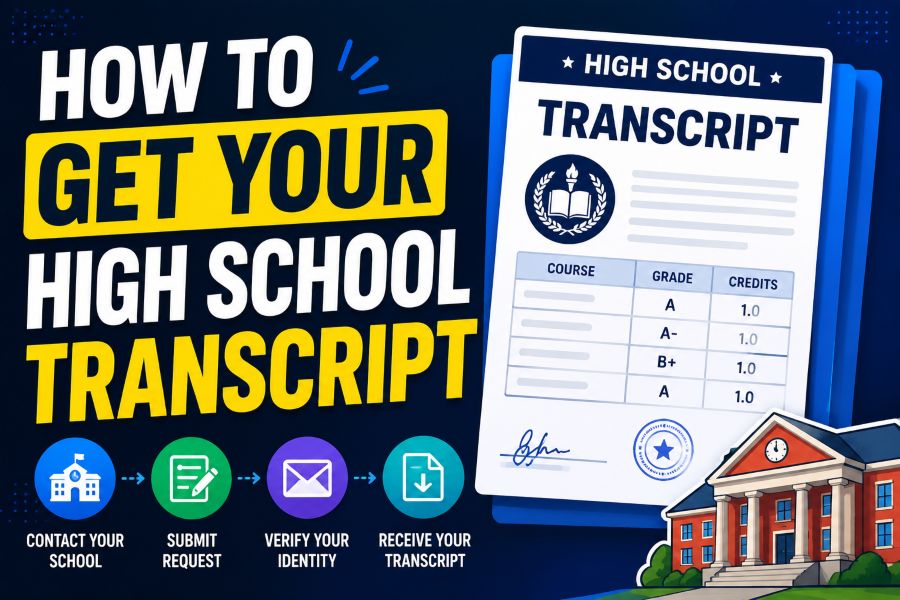
Learning how to get your high school transcript is important when you are applying to college, transferring schools, joining the military, starting a job, or proving graduation for another official purpose.
A high school transcript is an academic record that usually lists your courses, grades, credits, GPA, graduation date, and sometimes class rank or test information. Because it is an official document, schools usually have a set request process.
The exact steps depend on whether you are a current student, recent graduate, or former student whose school has closed or merged. Still, most requests follow the same basic path: identify the right office, submit required details, pay any fee, and choose where the transcript should be sent.
Getting organized before you request it can save time and prevent delays, especially if you need the transcript by a deadline.
Start by deciding whether you need an official or unofficial transcript. Official transcripts are usually sealed, signed, stamped, or sent directly by the school or district to the recipient.
Unofficial transcripts are often easier to access and may be available through a student portal, counselor, registrar, or school office. They are useful for personal review but may not be accepted for formal applications.
If you are still enrolled, your school counselor or registrar is usually the best first contact. They can explain the local request process and whether parent or guardian consent is needed.
If you already graduated, look for the records office, alumni services page, district website, or transcript request form for your former high school. Many districts now use secure online ordering systems.
Before submitting a request, gather your full name while enrolled, date of birth, graduation year, student ID if known, current contact information, and the complete delivery details for the college, employer, agency, or person receiving the transcript.
How Do You Request a Transcript?
Contact the Right Office
For current students, the guidance office, counseling department, registrar, or main office usually handles transcript requests. For graduates, the high school records office or district student records department is often responsible. If you are unsure where to begin, call the school’s main number and ask who manages official transcript requests.
Check the School Website
Many schools publish transcript instructions online under student services, counseling, alumni, records, or registration pages. Look for a downloadable form, online request portal, accepted payment methods, processing times, and delivery options. Reading these instructions first helps you avoid submitting an incomplete request.
Use an Online Ordering Platform
Some districts use third-party transcript services that verify your identity and send records electronically. These platforms may ask you to create an account, upload identification, sign a release, and pay a processing fee. Electronic delivery is often faster, but you should confirm the recipient accepts it.
Complete the Request Form
A transcript request form typically asks for your legal name, former name if applicable, birth date, graduation year, dates attended, phone number, email address, and recipient information. If the transcript must go to a college or employer, enter the exact mailing or electronic address provided by that organization.
Provide Identification
Schools may require proof of identity before releasing academic records. A driver’s license, state ID, passport, school ID, or other approved document may be accepted. This step protects your privacy and ensures the transcript is released only to you or to someone you authorize.
Pay Any Required Fee
Some schools provide transcripts for free, while others charge a small processing, mailing, or rush fee. Online services may add a convenience fee. If you need several copies, check whether the cost applies per transcript, per destination, or per order.
Track the Delivery
After submitting your request, save your confirmation number, receipt, or email record. Processing can take a few business days or longer during busy seasons. If a deadline is close, ask whether rush processing, pickup, or secure electronic delivery is available.
Key Steps Before You Submit
1. Confirm whether the recipient needs an official transcript or will accept an unofficial copy.
2. Gather your full identifying information, including any name you used while enrolled in high school.
3. Verify the exact destination address or electronic delivery details before placing the order.
4. Review processing times so your transcript arrives before the application or hiring deadline.
5. Keep proof of your request in case you need to follow up with the school or transcript service.
What Details Will Schools Ask For?
- Student name: Use your full legal name and include any former name, nickname, or last name used when you attended.
- Date of birth: Schools use this to match your request to the correct student record, especially when names are similar.
- Graduation year: Your graduation year or last year attended helps the records office locate your file more quickly.
- Contact information: Provide a current phone number and email address so the school can reach you if anything is missing.
- Recipient details: List the college, employer, agency, or person receiving the transcript, along with the exact delivery address.
- Signature or consent: Most official requests require your signature or digital authorization before records can be released.
- Delivery preference: You may need to choose mail, pickup, email, electronic portal delivery, or direct submission to an institution.
Common Transcript Situations
You Are a Current Student
If you are still in high school, ask your counselor how transcript requests work for college applications, scholarships, athletics, or transfers. Many schools send official transcripts directly through college application systems or counselor portals, so you may not need to mail anything yourself.
You Recently Graduated
Recent graduates may still be able to request records through the counseling office for a limited time. After that, transcript responsibility may move to the registrar, district office, or archived records department. Ask whether final transcripts have already been posted before ordering.
You Graduated Years Ago
Older records may take longer to retrieve, especially if they are stored in district archives. Be ready to provide extra identifying details, such as dates attended, former address, or a copy of identification. The more accurate your information is, the easier the search usually becomes.
Your School Closed or Merged
If your high school no longer exists, contact the local school district, county education office, state education department, or successor school. Public school records are often transferred to a district records office, while private school records may be handled by an accrediting body or state agency.
You Need a Transcript Fast
If a deadline is urgent, call before submitting the request and ask about rush options. Electronic delivery, in-person pickup, or direct submission through a transcript platform may be quicker than standard mail. Always confirm whether the recipient will accept the faster format.
You Need Multiple Copies
If you are applying to several colleges or jobs, order transcripts for each destination according to its instructions. Do not open sealed official envelopes unless the recipient specifically allows you to handle them, because opening a sealed transcript may make it unofficial.
There Is an Error on the Record
Review an unofficial copy first if you suspect a mistake in grades, credits, graduation date, or personal information. Contact the registrar or records department with documentation that supports the correction. Fixing an error can take time, so start early.
Once you understand how to get your high school transcript, the process is usually straightforward. The most important step is knowing whether you need an official or unofficial version.
Contact the correct school office, follow the required request method, and provide complete information the first time. Small details, such as a former name or exact graduation year, can prevent delays.
If your school has closed, your record likely still exists through a district, state agency, or records custodian. Start with the school district and work outward if needed.
Request your transcript as early as possible whenever a deadline matters. That gives you time to handle fees, identity checks, mailing delays, or corrections.
FAQs About how to get your high school transcript
Can I get my high school transcript online?
Many schools and districts allow online transcript requests through a school portal or secure transcript service. Check your high school or district website for the official process before using any third-party site.
How long does it take to get a high school transcript?
Processing times vary by school, but many requests take a few business days. Older archived records, mailed copies, and requests made during graduation or application season may take longer.
Is an unofficial transcript the same as an official transcript?
No. An unofficial transcript is usually for personal review, while an official transcript is verified by the school and often sent directly to the recipient or placed in a sealed envelope.
Can my parent request my transcript for me?
If you are under 18, a parent or guardian may be able to request it. If you are 18 or older, schools usually need your written permission before releasing your records to someone else.
What if I do not remember my student ID number?
You can usually request a transcript without a student ID if you provide other identifying details, such as your full name while enrolled, date of birth, graduation year, and dates attended.
Can I pick up my transcript in person?
Some schools allow in-person pickup, but you may need to show identification and submit a request form first. Ask whether the copy will be official and whether opening the envelope affects its status.
Where do I request a transcript if my school closed?
Start with the school district, county education office, or state education department. They can often direct you to the records custodian responsible for closed or merged schools.